Why Do Dogs Yawn? What Your Dog’s Yawn Really Means
Quick answer: Dogs yawn for four main reasons: to calm themselves when stressed, to signal to people or other dogs that they mean no harm, because they’re tired or waking up, and sometimes because they “catch” a yawn from someone they’re close to. The meaning depends on the situation and the rest of your dog’s body language.
A yawn on the sofa after dinner means something very different from a yawn in the vet’s waiting room. This guide explains why dogs yawn, how to tell a relaxed yawn from a stressed one, and when frequent yawning is worth a call to your vet.
What Your Dog’s Yawn Means at a Glance
| Situation | Other body language | Likely meaning |
|---|---|---|
| Waking up or settling down to sleep | Loose body, stretching, slow blinks | Tiredness or changing energy level |
| Being petted calmly | Soft eyes, relaxed mouth, leaning in | Contentment |
| Being petted or hugged | Stiff body, turning away, lip licking | Mild discomfort; wants space |
| Vet visit, grooming, car ride | Ears back, tucked tail, pacing, panting | Stress or anxiety |
| Meeting a new dog | Looking away, sniffing the ground | Calming signal: “I’m friendly” |
| Right after you yawn | Relaxed, attentive to you | Contagious yawning |
| Before a walk or game | Wagging, bouncing, whining | Excitement or anticipation |
Why Do Dogs Yawn? The 5 Main Reasons

1. To calm themselves down
Yawning is one of the best-known “calming signals” in dogs. When a dog feels overwhelmed, a yawn can help release tension, a bit like a person taking a deep breath before a hard conversation. You’ll often see it during training, at the groomer or in busy places.
2. To communicate “I’m not a threat”
Dogs use yawns to defuse tension with other dogs and with people. A yawn while looking away during a tense greeting is a polite way of saying “let’s keep this friendly.”
3. Stress and anxiety
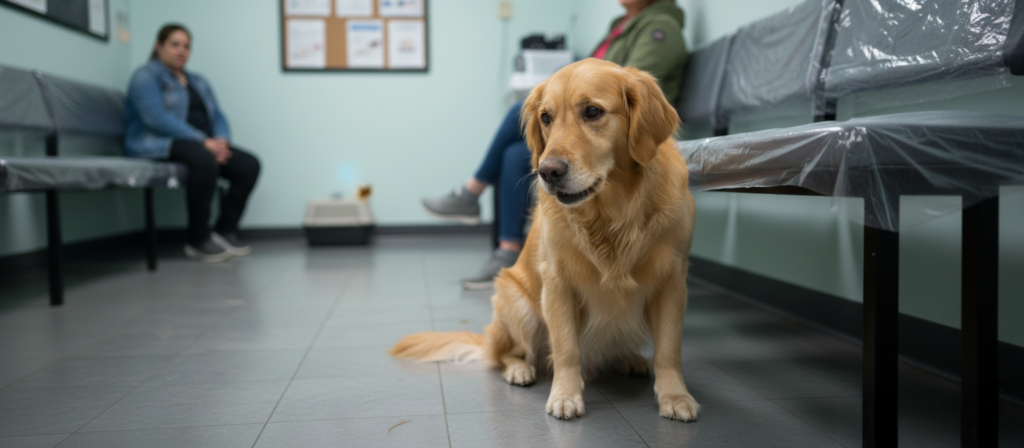
Repeated yawning in one setting, such as the vet, the car or a crowded room, often points to stress. Look for other signs: pacing, panting when it isn’t hot, lip licking, whale eye (showing the whites of the eyes), a tucked tail or avoiding eye contact. If grooming is a trigger, our guide to grooming an anxious dog can help.
4. Tiredness and waking up
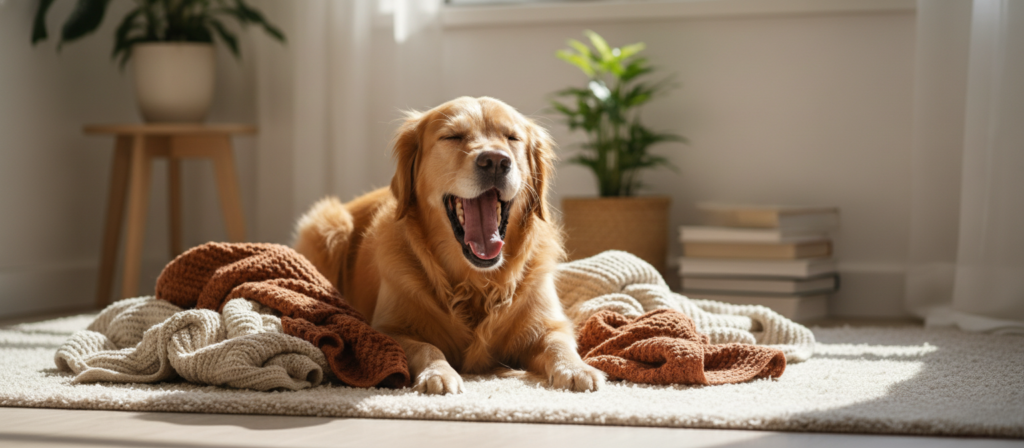
Sometimes a yawn is just a yawn. Dogs yawn when they wake up, before they sleep and while winding down after play, just as people do.
5. Contagious yawning
Some studies suggest dogs can catch yawns from people, and that it may happen more often with people they know well. Researchers still debate exactly why, but many see it as a sign of social connection.
What Does It Mean When a Dog Yawns When You Pet Them?
It can mean either relaxation or mild discomfort, and body language tells you which. A soft, loose body, relaxed ears and leaning into your hand mean your dog is content. A stiff body, a turned head, lip licking or moving away mean your dog would like a break. Many dogs dislike hugs or pats on the head even when they love other kinds of touch, so try a gentle scratch on the chest or side instead.
Why Does My Dog Yawn So Much?
Frequent yawning usually has a simple explanation, such as a change in routine, a new pet or person in the home, a move, or plenty of excitement. Help your dog adjust with a predictable routine, a quiet resting space and enough exercise. Our tips on keeping your dog calm when you leave home may also help.
When Is Dog Yawning a Health Concern?
Yawning on its own is rarely a medical problem. Talk to your veterinarian if yawning suddenly increases and comes with any of these:
- Drooling, lip licking or swallowing a lot, which can point to nausea
- Pawing at the mouth or reluctance to chew, which can point to dental pain (see our guide to bad breath in dogs)
- Restlessness, panting or not settling, which can point to pain
- Loss of appetite, vomiting or lethargy
How to Read Your Dog’s Yawn in 3 Steps
- Check the setting. Is your dog somewhere new, loud or busy, or at home and relaxed?
- Read the whole body. Ears, tail, eyes and posture tell you more than the yawn alone.
- Notice the timing. Yawns that always happen in the car or before grooming point to a specific trigger you can work on.
For a broader look at canine body language, read our tips for understanding the language of pets.
Helping a Dog That Yawns From Stress
- Give your dog a quiet, safe space to retreat to.
- Introduce new people, pets and places gradually.
- Keep training sessions short and positive, and pause if yawning increases.
- For grooming, choose a calm setting. In-home and mobile dog grooming avoid the noise of a busy salon, and our dog grooming appointment checklist shows how to prepare.
- If stress persists, talk to your vet or a certified behaviorist.
Frequently Asked Questions About Dog Yawning
Is yawning a sign of stress in dogs?
It can be. Yawning in unfamiliar or uncomfortable situations, such as vet visits or loud places, is a common stress signal, especially alongside lip licking, pacing or a tucked tail.
Do dogs yawn when they are happy?
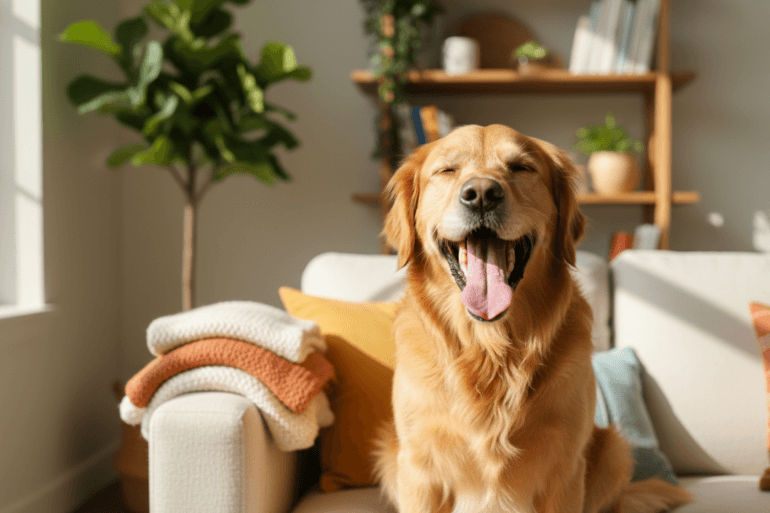
Yes. A slow yawn during calm moments or gentle petting, with a loose body and soft eyes, usually means your dog feels safe and relaxed.
Can dogs catch yawns from humans?
Some studies suggest they can, and possibly more often with people they know well.
Is excessive yawning in dogs normal?
Occasional yawning is normal. A sudden increase, especially with drooling, restlessness or appetite changes, is worth checking with your vet.
Why does my dog yawn at the vet or groomer?
Most likely to cope with stress in an unfamiliar setting. It’s common and usually not a concern, but it’s a sign your dog would benefit from a calmer, more gradual experience.
How can I tell what my dog’s yawn means?
Look at the setting, the timing and the rest of the body language, including ears, tail, eyes and posture.
The Bottom Line
Most dog yawns are normal communication: a way to stay calm, show friendly intentions or simply wind down. Read the yawn alongside your dog’s body language, reduce stress where you can, and check with your vet if yawning suddenly increases with other symptoms. And if grooming days make your dog yawn, a calm, one-on-one Groomit grooming appointment at home can make the experience easier.